

Ramp Car Games: GT Car Stunts
Fun Drive Games
Ramp Car Games: GT Car Stunts is the kind of strategy game I open when I want a quick burst of driving rather than a serious racing session. Its central appeal is simple: it turns oversized ramps, awkward landings, and narrow stunt routes into the main challenge. Instead of asking me to win a conventional lap, it makes me judge speed, balance, steering, and timing while trying to keep a car on a deliberately difficult track.
That focus gives the game a clear identity. Fun Drive Games has built it around the fantasy of impossible car stunts in a three-dimensional setting, and the result is more about controlling momentum than following racing lines. I found that distinction important because it changes what “good driving” means. A fast approach is not automatically useful; the best run is usually the one in which I arrive at the ramp with enough control to survive the landing.
The game is free to download and is listed for Teen players. It has reached over 100 million installs, with an average score of 4.4 from around 110 thousand ratings. Those figures suggest that the simple ramp-driving idea has a broad audience, but they do not remove the need to understand what sort of player will actually enjoy it. I think it works best for people who like short, repeatable challenges and do not mind restarting after a small mistake.
Related News

Why the ramp challenge matters more than ordinary racing
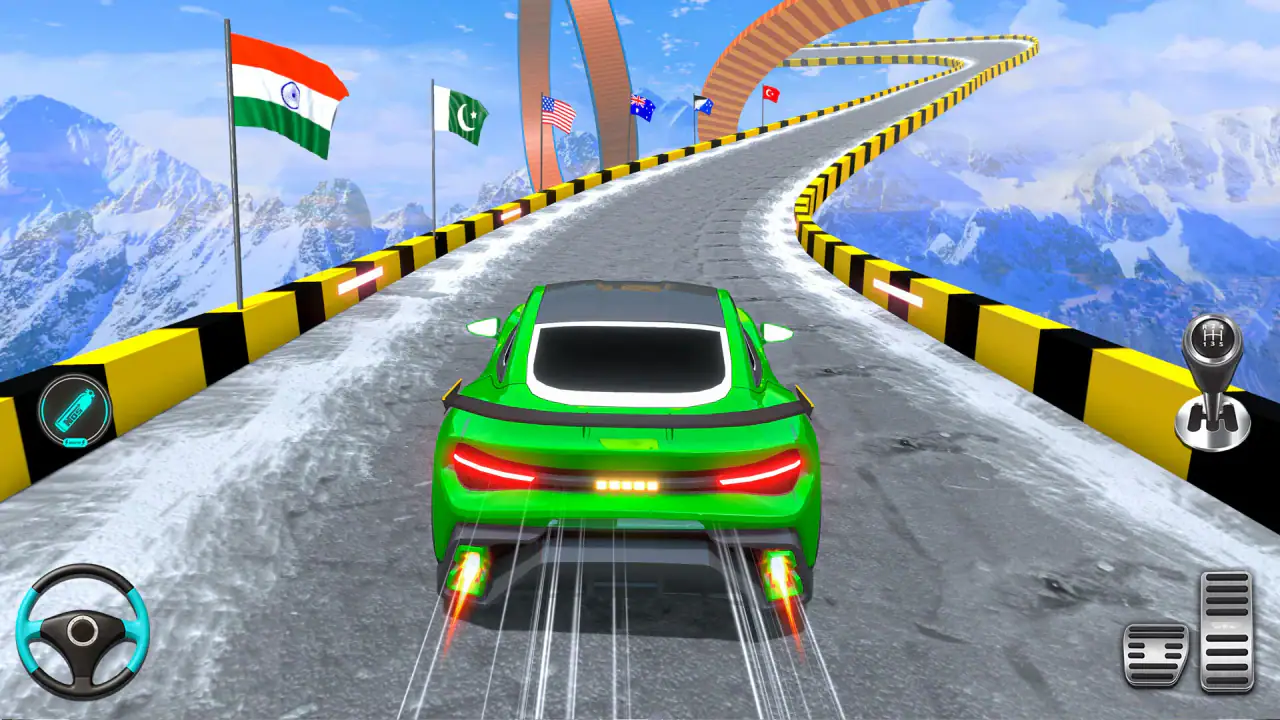
The strongest capability here is the way the stunt ramp becomes the entire decision point. In a usual racing game, a jump may be a brief visual flourish between corners. Here, the ramp is the reason to play. I have to think about the approach, the launch, the position of the car in the air, and the landing that follows. That makes each attempt feel closer to a small puzzle than a standard race.
This is also where the strategy category makes sense. I am still driving, but reflexes alone are not enough. If I rush toward a jump without considering the angle, I can lose control before the car even leaves the ground. If I correct too aggressively in the air, I may turn a promising attempt into a bad landing. The game rewards a calmer rhythm: line up, commit, observe the result, and adjust the next attempt.
Related News

Why WhatsApp Messenger Still Makes Everyday Communication Feel Easy

Jurassic World: The Game Is the Better Dino Tycoon for Strategic Players

Threads in Real Life: Who Should Join, Lurk, or Leave

How SHEIN Turned Shopping Into an Endless Content Feed

How to Make Fortnite Feel Smarter on Mobile

Should You Switch to Microsoft Outlook on Mobile?
The useful skill is not maximum speed; it is controlled momentum. That is the lesson I kept returning to while playing. When a route looks spectacular, it is tempting to treat it like an arcade sprint. In practice, the more reliable approach is to make small steering changes and avoid turning every jump into a frantic correction. This makes the game more satisfying than its short description might suggest, because progress comes from learning how the car behaves rather than simply holding the accelerator.
That focus also gives the game a different mood from circuit racers. There is less pressure to memorize a complete lap and more attention on one obstacle at a time. I can concentrate on the next ramp instead of worrying about a full race strategy involving tire management, opponents, or long-term championship planning. Players looking for realistic motorsport depth will find that narrow, but players who enjoy stunt attempts may appreciate the directness.
How I approach a difficult jump
My most useful habit was to treat every ramp as three separate moments. First comes the approach, where I try to keep the car centered and avoid unnecessary steering. Then comes the launch, where a clean line matters more than a last-second change. Finally, there is the landing, where I focus on bringing the car down in a stable position instead of chasing a dramatic angle.
Gallery
This sounds obvious, but separating those moments changes how I react to failure. If the car leaves the ramp badly aligned, the mistake probably happened before the jump, not during the flight. If the approach looks clean but the landing fails, I need to adjust my air control or launch timing instead of rebuilding the whole route in my head. That simple diagnosis saves time and makes repeated attempts feel purposeful.
I also found it useful not to judge a run only by whether the car reaches the next platform. A landing that technically succeeds but leaves the vehicle facing the edge can be worse than a slower, more centered landing. Thinking one obstacle ahead helps prevent a common mistake: celebrating the jump and immediately losing control on the short section that follows it.
Because the game is built around stunt driving, the camera and visual scale can make a route look more intimidating than it feels once I understand the timing. I recommend taking the first attempts as practice rather than trying to prove anything. Watch how much steering is needed, notice whether the car tends to drift during a jump, and then repeat the section with a smaller correction. That workflow is more effective than making a completely different move every time.
A practical session during a busy day
The best everyday scenario for me is a short break when I do not want to commit to a long game. I can play a few attempts, focus on one ramp, and stop without feeling that I have abandoned a complicated campaign. It suits a commute, a waiting room, or the few minutes before another task, provided I am comfortable with the possibility that a failed attempt may make me want “just one more try.”
The game is especially good when I want a challenge that is easy to understand immediately. There is no need to learn a large collection of rules before the central activity makes sense. I drive toward a stunt, try to land, and use the result to improve. That quick readability is one reason the large install base is understandable: the premise is accessible even for someone who does not usually play strategy games.
At the same time, I would not choose it for a relaxed session where I want constant forward progress. Repeating a stunt can be rewarding, but it can also become irritating if I am tired or impatient. The same design that makes a successful landing feel earned can make a small error feel disproportionately annoying. My advice is to play it when you are in the mood to retry, not when you want a passive distraction.
It can also work as a casual game to share with someone nearby. One person can attempt a route while another suggests slowing down or correcting the approach. Since the core challenge is visually clear, a friend does not need a long explanation to understand why a landing failed. That said, the experience remains centered on individual control rather than a deep multiplayer social structure, so I would not select it as a substitute for a dedicated competitive game.
Where it differs from ordinary racing alternatives
Compared with a conventional arcade racer, Ramp Car Games: GT Car Stunts places less value on overtaking and more on surviving the track itself. A racing alternative is usually better if I want close battles, recognizable lap patterns, or the excitement of passing opponents. This game is better when the obstacle is the opponent. The route, the ramp, and my own timing create the tension.
It also differs from simulation-focused driving games. I do not come here for realistic vehicle behavior, detailed motorsport preparation, or a faithful recreation of road driving. The appeal is exaggerated scale and stunt-oriented movement. That makes it easier to pick up, but it also means players searching for authentic handling should look elsewhere.
Against physics puzzle games, the comparison is closer. Both can reward experimentation and careful control, but the car-stunt format gives the challenge a more immediate arcade feel. I am not solving a static arrangement; I am trying to carry a moving vehicle through a sequence of dramatic obstacles. The trade-off is that the game may feel less intellectually varied than a puzzle title with many different mechanics.
The friction I noticed while playing
The biggest limitation is repetition. Once the basic ramp idea becomes familiar, enjoyment depends heavily on whether I like refining attempts. There is a satisfying learning curve in improving a landing, but it is not the same as discovering a broad range of systems. Players who need constant new mechanics, extensive customization, or a strong narrative may find the experience too focused.
Another issue is emotional rather than technical: failure can feel abrupt. A run that looks nearly perfect may end because the car touches down slightly off-center. That is appropriate for a stunt challenge, but it means patience matters. I would avoid recommending this to someone who dislikes restarting or who expects every attempt to produce visible progress.
The free entry point is helpful, although in-app purchases are listed from $4.99 to $25.99 per item. I would approach those purchases carefully and decide first whether the core stunt loop holds my attention without spending. The game is most appealing when I am improving through observation and control; spending should not replace that learning process. Anyone installing it for a child should also remember its Teen content rating and review the purchase settings before handing over the device.
Device compatibility is fairly broad because the game supports Android 7.0 and later. That makes it accessible to people using older Android phones, although the experience can still depend on the particular device and how comfortably it handles three-dimensional driving. I would keep the screen clean and use a stable grip, because small steering mistakes matter more on a narrow ramp than they do in a normal race.
Small habits that make the game more manageable
My first tip is to make one change at a time after a failed attempt. If I alter speed, steering, and launch position together, I cannot tell what helped. A slower approach may solve a landing problem, while a different steering angle may only hide the real issue. Controlled experimentation turns retries into useful information.
My second tip is to value a safe landing over a spectacular one. The visual design encourages dramatic jumps, but the practical goal is to keep the car usable after touching down. A modest adjustment that leaves the vehicle aligned for the next section is often better than a flashy correction that looks impressive for a moment and destroys the run.
My third tip is to stop after frustration starts changing my decisions. Once I begin steering harder simply because the previous attempt failed, I am no longer learning the route. A short break usually helps more than another dozen rushed tries. This is a small point, but it matters in a game whose difficulty comes from precision rather than from a large amount of content.
A fourth useful habit is to separate visual drama from actual danger. A tall ramp may look frightening, while a low or narrow landing can be the real problem. I try to identify where control is most likely to be lost instead of assuming the biggest jump deserves the most attention. That helps me spend my focus on the section that actually decides the run.
Who should install it
I would recommend this game to casual players who enjoy car stunts, short challenge loops, and the satisfaction of improving through repetition. It is a good fit if you like games that explain themselves quickly but still give you room to develop better timing. It also suits players who prefer a solo challenge without the complexity of a full racing career.
It is less suitable for someone seeking realistic driving, deep strategy across many systems, or a story that carries the experience from one stage to the next. Players who become frustrated by repeated failures should also think twice. The game asks for patience, especially when a route seems simple but demands a very particular approach.
For me, the best reason to keep it installed is the clarity of its central idea. I always know what I am trying to improve: the way I carry the car over a ramp and bring it down under control. That focus prevents the game from becoming confusing, but it also defines its limits. It is not trying to be a complete racing simulator or a broad strategy adventure.
Fun Drive Games’ current version is 5.6, and the game remains a straightforward choice for anyone drawn to exaggerated car courses. I would start with the free experience, test whether repeated stunt attempts feel satisfying, and only then consider any optional purchase. If controlled momentum and careful landings sound more appealing than overtaking rivals, this is a worthwhile pick; if you want variety beyond ramps, a conventional racing game will probably serve you better.
FAQs for Ramp Car Games: GT Car Stunts
What is the main objective of Ramp Car Games: GT Car Stunts?
The primary goal of Ramp Car Games: GT Car Stunts is to complete daring stunts and challenges using high-performance vehicles. Players navigate through intricate tracks filled with ramps, loops, and obstacles, aiming to achieve high scores and unlock new levels and cars. The game tests a player’s driving skills and precision.
Is Ramp Car Games: GT Car Stunts free to play?
Yes, Ramp Car Games: GT Car Stunts is free to download and play. However, it contains in-app purchases and ads. Players can buy additional features, such as new cars or premium content, and remove ads by making purchases within the app. This allows for a customized gaming experience.
What type of controls does Ramp Car Games: GT Car Stunts offer?
Ramp Car Games: GT Car Stunts offers intuitive, user-friendly controls designed for touchscreens. Players can choose between tilt controls, on-screen buttons, or steering wheel options to suit their driving preferences. The game ensures responsiveness and precision, providing an enjoyable experience for users of all skill levels.
Are there multiplayer features in Ramp Car Games: GT Car Stunts?
Currently, Ramp Car Games: GT Car Stunts focuses on single-player gameplay. Players can compete against their own scores or aim to rank on global leaderboards. Future updates may introduce multiplayer features, allowing players to race against friends or other online users, enhancing the competitive aspect of the game.
What are the system requirements for Ramp Car Games: GT Car Stunts?
Ramp Car Games: GT Car Stunts is designed to run smoothly on most modern Android and iOS devices. For optimal performance, it is recommended to have a device with at least 2GB of RAM and a recent operating system version. Regular updates ensure compatibility and enhanced gameplay across various devices.
Pros
- Stunning 3D graphics enhance gameplay immersion.
- Wide range of cars to choose from.
- Challenging stunt tracks keep the game exciting.
- Smooth controls for easy maneuverability.
- Offline mode available for gameplay anywhere.
Cons
- In-app purchases can be pricey.
- Advertisements may interrupt gameplay.
- Limited customization options for vehicles.
- Repetitive levels might reduce replay value.
- Requires substantial storage space on device.


